



In this blog, you’ll learn:
IBM’s 2024 research put the global average cost of a data breach at USD 4.88 million, while the Information Commissioner’s Office (ICO) said more than 3,000 cyber breaches were reported to it in 2023, with finance among the sectors reporting the most incidents.
For accountancy practices, that makes data security in outsourced accounting services more than an IT topic. It is central to client trust, GDPR compliance, and everyday service delivery.
This article explains how secure outsourced accounting services should protect confidential financial information, what to ask before outsourcing, and how firms can manage risk without slowing down delivery.
Outsourced accounting can be highly secure when the provider uses mature controls, clear contracts, restricted access, monitored systems and documented incident response. The risk is not outsourcing itself, but weak governance: unclear responsibilities, over-permissive access, poor staff training, unmanaged software connections, or a provider that cannot evidence its security posture.
For UK practices, secure accounting outsourcing UK should combine technical safeguards with practical operating discipline, so teams can deliver bookkeeping, accounts, payroll, tax, and reporting work without exposing client data.
Accounting data is valuable because it often combines personal data, bank details, payroll records, tax identifiers, management accounts, invoices, supplier information and access to client systems. Criminals can use this information for fraud, impersonation, business email compromise, ransomware, invoice redirection and identity theft.
| Threat Type | Impact |
|---|---|
| Phishing Attacks | Credential theft and unauthorised access |
| Ransomware | Operational disruption and data loss |
| Insider Threats | Intentional or accidental disclosures |
| Weak Password Controls | Account compromise |
| Unsecured File Sharing | Exposure of sensitive data |
| Third-Party Risks | Security vulnerabilities introduced through vendors |
The most relevant accounting cybersecurity threats usually include:
A useful risk view is to consider likelihood and impact together. High-likelihood, high-impact risks such as phishing, weak passwords, and excessive access should be treated first. Lower-likelihood but severe risks, such as ransomware or large-scale data exfiltration, still need tested recovery plans because the operational disruption can be significant.
Firms often worry about losing control once work leaves the office. That concern is understandable, especially when client records contain payroll details, tax returns, bank information and commercially sensitive reports.
A good outsourcing model should make control more visible, not less visible, through defined workflows, access permissions, audit trails and regular governance reviews.
Typical concerns include where data is stored, who can access it, whether files are downloaded locally, how passwords are managed, how staff are vetted and trained, and what happens when a team member leaves. Practices should also ask whether the provider uses subcontractors, how cross-border processing is governed, and how quickly incidents are escalated. These are not awkward questions; they are normal due diligence for financial data protection.
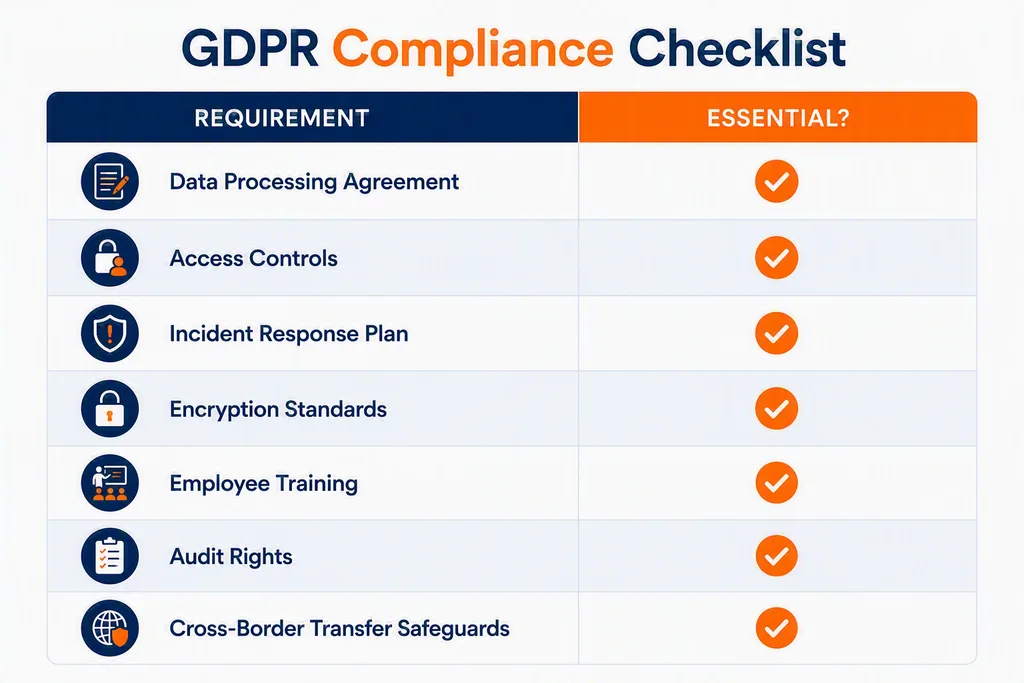
GDPR accounting outsourcing starts with role clarity. In many arrangements, the accountancy firm remains the controller for client personal data, while the outsourcing provider acts as a processor. That means the firm must choose a processor that can provide sufficient guarantees, and the contract should describe processing instructions, confidentiality, security measures, subprocessors, assistance with data-subject rights and breach support.
The UK GDPR security principle requires personal data to be processed with appropriate security, including protection against unauthorised or unlawful processing, accidental loss, destruction, or damage. The ICO links this to Article 32, which requires technical and organisational measures appropriate to the risk; the ICO also recognises encryption as an appropriate technical measure in many contexts.
If a personal data breach is likely to create a risk to people’s rights and freedoms, organisations must notify the ICO as soon as possible and, where feasible, within 72 hours of becoming aware of it. This is why contracts for secure client data management should include fast escalation routes, named contacts and evidence preservation requirements.
ISO 27001 is not a magic badge, but it is a useful sign that a provider has implemented a structured information security management system. The ISO standard supports the establishment, maintenance and continual improvement of an ISMS, using a risk-management process suited to the organisation’s size and needs.
For accounting outsourcing, ISO 27001-aligned controls should show up in everyday working practices, not just policy documents. Look for access control, asset management, secure development or configuration practices, supplier management, business continuity, logging, incident management, staff awareness, physical security and regular internal audits. If the certification scope excludes the delivery centre or service you plan to use, ask for clarification before relying on it.
Secure and compliant accounting outsourcing should reduce unnecessary data movement. The safest model is usually to work inside approved client systems, with role-based permissions, multi-factor authentication, and clear restrictions on downloads, printing, and local storage. Where documents must be transferred, encrypted portals are preferable to email attachments.
Good secure client data management also includes:
These controls support both practical delivery and data security in outsourced accounting services because they limit mistakes, reduce fraud opportunities and make activity easier to review.
Before signing, treat outsourcing due diligence as a client-protection exercise. The goal is to understand how the provider works on a normal day and how it behaves when something goes wrong.
When evaluating a secure accounting outsourcing services UK provider, ask about the following:
| Security Standard | Why It Matters |
|---|---|
| ISO 27001 | Information security management |
| ISO 27701 | Privacy information management |
| Cyber Essentials | UK cybersecurity controls |
| SOC 2 | Security, availability, confidentiality |
| GDPR Compliance Framework | Legal data protection requirements |
| Business Continuity Planning | Operational resilience |
If you’re currently evaluating outsourcing providers and planning to conduct due diligence, use the below checklist:
Use this checklist:
Also Check: Top Outsourced Accounting Companies in the UK
At QX Accounting Services, data security is built into our service delivery model. We understand that accounting firms trust us with highly sensitive client information, and we take that responsibility seriously.
| Area | QX Security Framework |
|---|---|
| Information Security | ISO 27001 |
| Privacy Management | ISO 27701 |
| Cybersecurity Controls | Cyber Essentials Plus |
| Governance | Dedicated Data Protection Team |
| Data Access | Role-Based Controls |
| Endpoint Security | Device Encryption & Monitoring |
| Business Continuity | Tested Disaster Recovery Plans |
Over the years, more than 500 accounting firms globally have partnered with QX because security, quality, and operational excellence remain central to our delivery approach.
Firms trust QX because we offer:
Most importantly, we recognise that protecting client information is not simply an IT responsibility. It is a business responsibility.
Data security in outsourced accounting services depends on disciplined governance, not promises. The right partner should be able to evidence its controls, explain its GDPR position, protect confidential financial information, manage HMRC-related workflows carefully and respond quickly if something goes wrong.
For accountancy practices, the strongest approach is to choose secure outsourced accounting services with documented controls, then keep reviewing them. Outsourcing should make your firm more resilient, scalable and focused, while keeping client trust firmly protected.
Secure outsourced accounting providers use a combination of encryption, multi-factor authentication, role-based access controls, security monitoring, employee training, and incident response procedures to safeguard sensitive financial data and ensure strong financial data protection.
Under GDPR, accounting firms generally remain the data controller, while the outsourcing provider acts as a data processor. GDPR accounting outsourcing arrangements require documented data processing agreements, robust security controls, lawful data handling, and breach notification procedures.
ISO 27001 is the internationally recognised standard for information security management. It helps secure outsourced accounting services by establishing structured controls around risk management, access security, incident response, and continuous improvement.
Businesses should request evidence of ISO 27001 certification, audit reports, cybersecurity policies, employee training programmes, incident response documentation, and business continuity plans. Independent certifications provide strong evidence of accounting outsourcing data security maturity.
Secure accounting outsourcing UK providers maintain confidentiality through strict access controls, confidentiality agreements, encrypted systems, employee security training, GDPR-compliant processes, and ongoing compliance monitoring.
UK firms trust QX Accounting Services because of our established security framework, ISO-certified processes, dedicated data protection controls, mature governance model, and proven track record supporting 500+ accounting firms globally while protecting confidential financial information.

Namrata is an Accounting and Learning & Development professional with over 10 years of experience in the outsourcing industry, specialising in UK bookkeeping, VAT, final accounts, and taxation. She is proficient in a wide range of accounting software, ensuring accurate and efficient financial solutions. With nearly 2 years of hands-on experience in Learning & Development, she also contributes to employee training, skill enhancement, and process improvement strategies aligned with organisational goals.
Unauthorized copying or plagiarism of our content is a violation of intellectual property rights. We take such matters seriously and will pursue legal action to protect our original work. Anyone found engaging in such activities will be held accountable under applicable laws.
Explore outsourcing solutions, request a no-obligation trial or discuss your practice’s needs with our expert consultants.





 Book a Virtual Meeting
  Book an In-person Meeting