Time Zone Advantage in Offshore Bookkeeping for US CPA Firms



For many firms, the biggest misconception about offshore bookkeeping is that the value starts and ends with cost.
It does not.
When structured correctly, offshore bookkeeping helps CPA firms reduce waiting cycles, shorten handoff delays, and keep work moving outside the constraints of a single business day. The time zone advantage is not about “overnight magic.” It is about designing a workflow where progress continues even when the onshore team has signed off for the day.
That distinction matters.
If you are already evaluating offshore bookkeeping, the real question is not whether the team sits in another geography. The real question is whether your workflow is designed to move faster, with clear ownership, visibility, and quality controls built in.
Many firms approach this through structured outsourcing bookkeeping services aligned to their workflows and delivery structure.
At QX Accounting Services, offshore bookkeeping becomes easier to evaluate as an operating model. The firms that see the most value are not simply looking for lower-cost execution. They are looking for a better way to reduce lag, improve turnaround, and create more consistency across recurring work.
“The difference between busy teams and effective teams is simple: defined work, clear ownership, and accountability at every step.”
Cora Vollmar, Sr VP Growth, QX Accounting Services
- Why the Time Zone Advantage Matters
- Offshore Bookkeeping Is Not About Working Overnight, It Is About Removing Delays
- Where CPA Firms Actually See the Benefit
- How the Relay Model Works in Practice
- Better Handoffs Create Faster Turnaround
- Why This Matters During Month-End
- Control Does Not Decrease, It Needs to Be Designed In
- The KPIs That Actually Show Whether It Is Working
- When the Time Zone Advantage Breaks Down
- How to Evaluate Whether This Model Fits Your Firm
- The Real Advantage Is Workflow Continuity
- Conclusion
- FAQs
Why the Time Zone Advantage Matters
In many CPA firms, delays do not happen because people are not working hard. They happen because work is waiting.
- A bookkeeping file waits for review
- A clarification waits for the next morning
- A cleanup task waits until someone becomes available
- Month-end closes stretch because every step depends on the last handoff
These are workflow delays, not talent problems.
The time zone advantage helps remove some of that waiting. When work is handed off correctly, an offshore bookkeeping team can continue processing, updating, organizing, or preparing the next stage while the onshore team is offline. That means the next morning starts with progress already made, rather than work sitting idle in a queue.
This is why firms increasingly view offshore bookkeeping as a workflow model, not just a staffing decision.
Offshore Bookkeeping Is Not About Working Overnight, It Is About Removing Delays
The phrase “time zone advantage” is often misunderstood. It can sound like a vague promise of nonstop productivity, when in reality, its value lies in creating a more practical and efficient workflow.
That is not the real benefit.
The real advantage is straightforward: work moves forward with fewer stop-start delays.
When bookkeeping workflows are documented properly, routine tasks can be completed in a relay model. Work moves from one team to the next with clear instructions, agreed turnaround times, and defined checkpoints. Instead of compressing everything into one workday, firms create a rolling process where tasks keep moving forward.
That leads to faster turnaround, better task continuity, and fewer avoidable bottlenecks.
For firms that manage high transaction volumes, recurring reconciliations, cleanup work, or multi-client schedules, this can create meaningful operational improvement.
Where CPA Firms Actually See the Benefit
The time zone advantage is most useful in areas where work tends to stack up, repeat frequently, or depend on timely handoffs.
For example, offshore bookkeeping support can help when firms need to:
- Process routine bookkeeping tasks before the next business day begins
- Prepare reconciliations for review early in the onshore morning
- Reduce lag in transaction categorization and exception handling
- Keep monthly close work moving across multiple clients
- Organize supporting documents and clean up workpapers ahead of review
- Create continuity between bookkeeping completion and higher-value advisory or accounting work
In each of these cases, the gain is not just speed. It is continuity.
Instead of restarting work after every pause, firms create an operating rhythm where routine tasks move forward predictably.
That is why many firms exploring this model first start by looking at recurring bookkeeping processes. These are often the most suitable workflows for offshore coordination because the steps are repeatable, trackable, and easier to standardize.
Case Study
How JBA CPA LLC Handled 30+ Projects Without Expanding Internal Overhead
View Success Story
How the Relay Model Works in Practice
The strongest offshore bookkeeping workflows are built like a relay, not a loose task list.
The onshore team does not simply send work out and hope it comes back completed. Instead, the process is structured so that each handoff has:
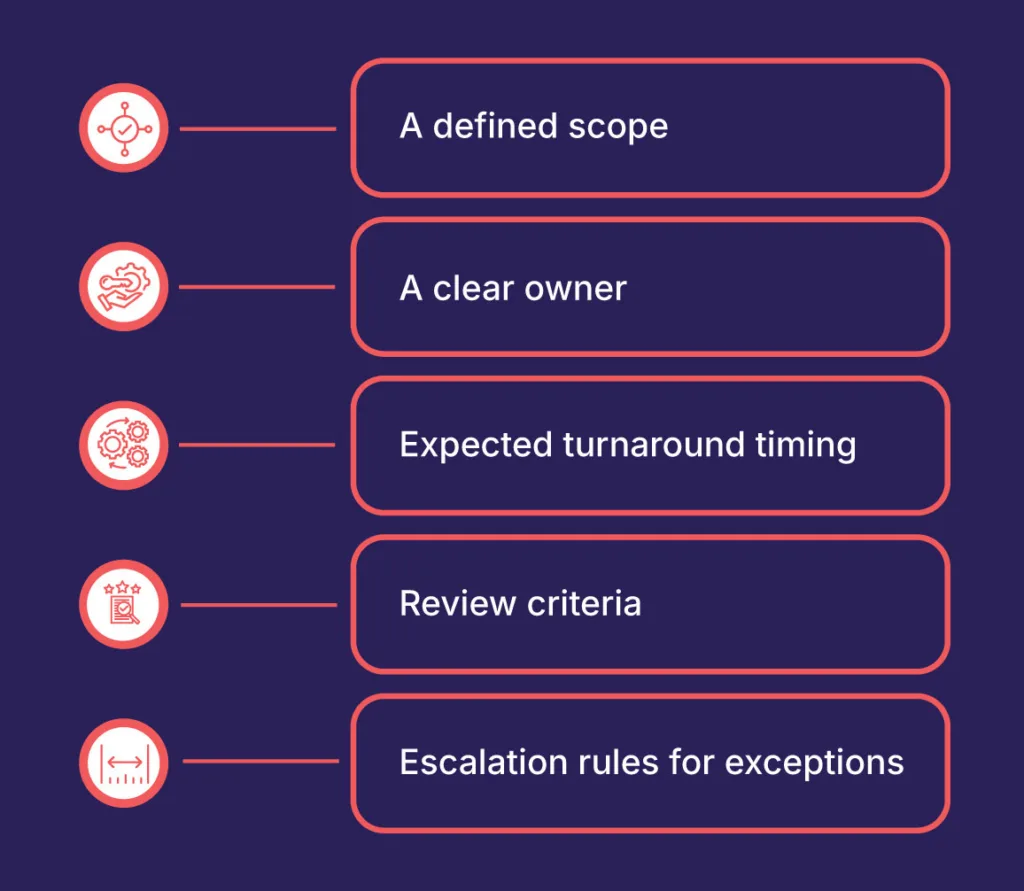
This is what makes the time zone advantage operationally useful.
For example, the onshore team may complete client communication, resolve priority exceptions, and assign the next set of bookkeeping activities before signing off. The offshore team then picks up those tasks, processes the work based on documented rules, flags anything that needs review, and prepares outputs for the next onshore cycle.
By the time the US team is back online, the work has moved.
That is the difference between offshore support that creates leverage and offshore support that creates more coordination overhead.
Better Handoffs Create Faster Turnaround
Time zones alone do not improve efficiency. Better handoffs do.
If instructions are incomplete, naming conventions are inconsistent, or exception management is unclear, the time zone gap can actually slow work down. Questions pile up, rework increases, and teams lose momentum.
That is why handoff design matters more than geography.
Effective offshore bookkeeping handoffs usually include:
- standardized task instructions
- clearly documented client-specific rules
- cutoff times for same-cycle processing
- defined channels for questions and escalations
- visible status tracking
- review notes that make follow-up easy
When these elements are in place, offshore teams can work with confidence and consistency. When they are missing, firms end up using offshore support reactively rather than strategically.
The firms that benefit most are usually the ones that treat bookkeeping workflows as an operating system, not a set of disconnected tasks.
Why This Matters During Month-End
Month-end is where waiting cycles become most visible.
Even firms with strong teams often feel pressure during close because every small delay compounds. Missing backup, unresolved classifications, late reconciliations, or incomplete workpapers can all push review timelines further out.
This is where offshore bookkeeping can add structure.
Instead of waiting for the onshore team to complete every step during local hours, firms can distribute parts of the close process across a coordinated workflow. Routine preparation tasks, account reconciliations, cleanup steps, and document organization can continue outside the onshore day, which gives reviewers a more prepared starting point the next morning.
That does not eliminate the need for oversight. It makes oversight more efficient.
Reviewers spend less time chasing incomplete work and more time focusing on judgment, exceptions, and final quality checks.
Control Does Not Decrease, It Needs to Be Designed In
One of the most common concerns around offshore bookkeeping is control.
That concern is valid. But in well-run models, control does not disappear. It becomes more intentional.
The firms that do this well do not rely on informal instructions or tribal knowledge. They build control into the workflow through:
- documented SOPs
- role-based access
- review checkpoints
- approval thresholds
- client-specific process notes
- exception logs
- turnaround expectations
- audit trails across systems and files
This is an important shift in mindset.
Offshore bookkeeping should not be evaluated as “Can someone else do this work?” It should be evaluated as “Can this workflow be run in a controlled, repeatable way without creating more risk?”
That is the standard that matters.
For confidentiality and compliance, CPA firms should review offshore bookkeeping workflows through four practical lenses: professional liability, SOC reporting and control frameworks, IRS data security guidance, and Section 7216 rules on taxpayer information disclosure.
At QXAS, offshore bookkeeping support is structured around security, quality, and trust standards for CPA firms that want both efficiency and accountability. The goal is not to move work away from the firm, but to create a workflow model that keeps work moving while preserving visibility and control.
The KPIs That Actually Show Whether It Is Working
If a firm wants to evaluate whether the time zone advantage is delivering value, it needs to look beyond cost savings.
The better indicators are operational.
Useful KPIs include:
- turnaround time for recurring bookkeeping tasks
- time-to-review readiness
- month-end close cycle time
- volume of rework or review corrections
- number of unresolved exceptions at handoff
- task completion rates by cutoff time
- reviewer time spent on cleanup versus decision-making
- client responsiveness supported by faster internal turnaround
These metrics reveal whether the offshore model is reducing friction or simply shifting work between teams.
A strong setup should create clearer queues, fewer idle gaps, and more prepared outputs for the next stage of work.
When the Time Zone Advantage Breaks Down
Not every offshore bookkeeping setup automatically works well.
The model usually breaks down when firms try to layer offshore support onto unclear processes. The most common issues include:
- inconsistent task assignment
- poor documentation
- no defined review cadence
- too many one-off exceptions
- unclear ownership between teams
- lack of workflow visibility
- delayed responses to offshore queries
- trying to offshore unstable processes before standardizing them
When these issues exist, the problem is not the time zone. The problem is the workflow design.
This is also why some firms initially feel that offshore bookkeeping creates more back-and-forth. In many cases, the operating model was never structured to support distributed execution in the first place.
Once workflows are documented, handoffs are clarified, and responsibilities are aligned, the time zone advantage becomes much easier to realize.
How to Evaluate Whether This Model Fits Your Firm
If you are exploring offshore bookkeeping, start with process fit rather than headcount replacement.
Ask:
- Which bookkeeping tasks are recurring, rules-based, and time-sensitive?
- Where do delays typically happen today?
- Which handoffs create avoidable waiting?
- What work could realistically move forward outside local business hours?
- Where do reviewers lose time because work is not fully prepared?
- What controls need to be in place before scaling the model?
These questions help firms evaluate offshore bookkeeping as an operating decision, not just a resourcing decision.
That is the healthier approach.
It helps leadership assess whether offshore support will actually improve workflow performance, client responsiveness, and internal capacity rather than simply adding another layer to manage.
The Real Advantage Is Workflow Continuity
The time zone advantage in offshore bookkeeping is not about keeping someone awake while someone else sleeps.
It is about creating workflow continuity.
When bookkeeping operations are designed well, work does not stall at the end of the day. Routine execution continues, handoffs become cleaner, reviewers start with better-prepared outputs, and firms reduce the stop-start rhythm that slows delivery.
That is what makes offshore bookkeeping valuable for firms that want more than labor arbitrage.
They want a model that helps work move.
And that is exactly where the time zone advantage becomes meaningful.
Conclusion
For US CPA firms, the time zone advantage in offshore bookkeeping is not just about extending the workday, it is about building a more responsive, continuous, and scalable finance workflow.
With the support of QX Accounting Services, firms can keep bookkeeping tasks moving beyond standard business hours, reduce turnaround times, and stay better prepared during peak periods without overburdening internal teams.
When backed by clear processes, review checkpoints, and strong communication, this approach helps CPA firms improve consistency, deliver faster service, and create a back-office function that can support long-term growth.

Ready to explore what this could look like for your firm?
Book a ConsultationFAQs
How does offshore bookkeeping enable 24/7 financial operations?
Offshore bookkeeping enables 24/7 financial operations by allowing work to continue after the onshore workday ends. Offshore bookkeeping teams can complete transaction processing, reconciliation prep, and close support overnight, so CPA firms in the United States start the next day with work that is already prepared for review. This creates a continuous workflow without shifting control or final approval away from the firm.
How do time zone differences improve turnaround time in bookkeeping tasks?
Time zone differences improve turnaround by reducing the delay between execution and review. Instead of waiting until the next business day to begin bookkeeping tasks, offshore teams can move work forward during off-hours and prepare it for the onshore team. This helps firms achieve faster turnaround in bookkeeping outsourcing, especially for repeatable tasks such as transaction coding, reconciliations, and month-end preparation.
What workflows help CPA firms leverage offshore bookkeeping across time zones?
CPA firms benefit most when offshore bookkeeping across time zones follows a structured relay model. In that model, the offshore team completes defined tasks, packages the work with notes and support, and passes it to the onshore team for review and approval. Clear overlap windows, daily handoff notes, escalation rules, and review-ready packaging are the workflows that make remote bookkeeping across time zones efficient and predictable.
How can CPA firms optimise productivity using offshore bookkeeping teams?
CPA firms can optimise productivity by assigning repeatable, process-driven bookkeeping work to offshore teams while keeping review, approvals, and client communication in-house. This allows onshore staff to spend less time on preparation and more time on validation, advisory work, and client responsiveness. When managed well, offshore bookkeeping teams improve delivery speed without increasing review pressure.
Why is time zone alignment important in offshore bookkeeping operations?
Time zone alignment is important because it helps bookkeeping work move forward without unnecessary pauses. The real time zone advantage in offshore bookkeeping comes from removing waiting cycles between execution and review. When tasks are completed, documented, and handed off clearly across time zones, firms gain better continuity, more predictable month-end workflows, and stronger operational efficiency.
Enquire now

Bhagyashree Patankar
With over 14 years of global experience in finance and accounting, Bhagyashree is a Chartered Accountant and US CPA with a master’s in Accounting and Finance. She leads an 80+ member team across accounting, audit, and tax, driving operational excellence, talent development, and high-quality delivery. Known for her precision and strategic insight, she transforms financial data into actionable business strategies that enhance decision-making, efficiency, and sustainable growth.
Unauthorized copying or plagiarism of our content is a violation of intellectual property rights. We take such matters seriously and will pursue legal action to protect our original work. Anyone found engaging in such activities will be held accountable under applicable laws.
Don't forget to share this post!
Our Latest Insights


Marketing Services
Outsourced Marketing Services vs In-House Team for CPA Firms...
23 September 2026

Marketing Services
How to Choose an Outsourced Marketing Partner for Your CPA F...
21 September 2026

Let’s Work Together
Explore outsourcing solutions, request a no-obligation trial or discuss your practice’s needs with our expert consultants.
 Book a Virtual Meeting
  Get Your ROI Estimate