



There’s a headline doing the rounds that should make every audit professional pause: within the next few years, we may not need human auditors for large parts of audit work.
That’s not science fiction. It’s already happening.
Across the Big Four, AI agents are being deployed to handle core audit procedures, such as testing transactions, analysing contracts, and flagging anomalies, at a scale no human team can match. Routine audit testing is rapidly becoming automated, with firms expecting near-complete automation of these tasks in the coming years.
So, let’s address the uncomfortable question directly:
Are we witnessing the beginning of the end for human auditors?
My answer: No. But we are witnessing the end of auditing as we know it.
For years, audit has relied on a pyramid model:
Large teams. Manual processes. Sampling instead of full coverage. Long hours spent on tasks that honestly were never the best use of human capability.
AI doesn’t just improve this model. It breaks it.
We’re now seeing systems that can:
The result? Tasks that once took days now take minutes.
Some firms are already reporting 30-40% efficiency gains in audit workflows using this model. And that’s just the start.
Also Read: The Death of Traditional Operating Models in Accounting Firms
There’s a growing narrative that AI will replace auditors. Personally, I feel it won’t.
But it will make a large part of what auditors currently do redundant. And that distinction matters. Because the traditional entry-level audit role, built around repetitive testing and documentation, is being automated out of existence.
This means, going forward there will be fewer junior roles, different skill requirements, and a very different career path.
At the same time, firms adopting AI are seeing shifts, not shrinkage, in demand. The need for people doesn’t disappear. It simply changes from execution to interpretation, and from ticking boxes to challenging outcomes.
The future auditor won’t win on effort. They will win on judgement.
AI can identify anomalies. But it cannot decide what they mean in a business context.
AI can process data at scale. But it cannot replace professional scepticism.
That’s where the value shifts. And that’s where many firms are not yet ready.
There’s another side to this transformation, one that doesn’t get nearly enough attention.
Trust.
Audit isn’t just a process. It’s a public good.
And as firms embed AI deeper into audit workflows, a critical question emerges:
Who audits the algorithm?
Regulators are already signalling concern. The pace of AI adoption is outstripping the frameworks needed to govern it—especially around bias, explainability, and accountability.
If firms can’t confidently answer how their AI reaches conclusions, they risk undermining the very trust audit is built on.
The biggest mistake I see is treating AI as a bolt-on. Adding tools, running pilots, automating isolated tasks – that approach won’t hold.
Because this shift isn’t about tools. It is about redesigning the audit model itself.
Firms that succeed will:
In short, they’ll rethink audits from the ground up.
Audit has always been under pressure – on margins, on talent, on timelines.
AI doesn’t create those problems. It exposes them. It forces the profession to confront an uncomfortable truth:
Much of audit work was never meant to be done by humans at scale.
AI won’t replace auditors. But it will replace the version of auditing we’ve been comfortable with for decades.
The firms that treat this as a threat will fall behind. But the ones that treat it as a reset will move ahead fast.
Because in the end, auditing isn’t about who does the work. It is about who takes responsibility for the outcome. And that’s one thing AI can’t sign off on.
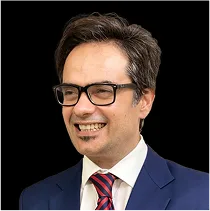
Sagar is a seasoned leader with about two decades of experience in Finance & Accounting Outsourcing. As CEO of QX Accounting Services and a Board member of QX Global Group, he drives strategic growth and global expansion. His expertise in outsourcing, automation, and strategic planning helps accounting firms thrive in a rapidly evolving market.
Unauthorized copying or plagiarism of our content is a violation of intellectual property rights. We take such matters seriously and will pursue legal action to protect our original work. Anyone found engaging in such activities will be held accountable under applicable laws.
Explore outsourcing solutions, request a no-obligation trial or discuss your practice’s needs with our expert consultants.





 Book a Virtual Meeting
  Book an In-person Meeting