Secure Accounting Outsourcing for CPA Firms in 2026: An Expert Guide



Executive Summary
CPA firms across the United States are facing structural pressure. This pressure is forcing firms to rethink traditional operating models. Talent shortages, increasing regulatory complexity, and rising client expectations make it harder for firms to scale or stay in control. All these make one thing pretty clear: the solution does not lie with the traditional outsourcing model anymore.
Industry research from the American Institute of CPAs (AICPA) suggests that the accounting profession has lost more than 300,000 professionals in recent years, while the pipeline of new graduates entering the field continues to shrink. At the same time, hiring experienced accountants now takes significantly longer, often stretching to more than two months.
As a result, many firms are adopting accounting outsourcing as a strategy to expand delivery capacity without permanently increasing internal headcount. Traditional outsourcing looks fine up to this stage.
But here comes the twist. Outsourcing financial work introduces additional responsibilities. CPA firms manage highly sensitive client data, including social security numbers, financial records, and business income statements. According to a study by the Internal Revenue Service, tax professionals remain frequent targets of cybercriminals due to the volume of confidential financial information they store.
This makes data security for CPA firm outsourcing and IRS compliance in accounting outsourcing critical considerations. Firms must ensure any outsourcing partner maintains strict security frameworks, including SOC 2 compliance, has a secure technology infrastructure, and strong data protection policies.
When implemented correctly, secure accounting outsourcing for CPA firms allows organizations to scale operations, maintain regulatory compliance, and protect client trust. This creates a new perspective on how outsourcing is viewed. We will cover this new approach in more detail in the sections ahead.
The State of the Profession
Public accounting used to follow a predictable staffing model. Firms would hire entry-level accountants, train them, and slowly grow as these professionals advanced. However, this approach is no longer practical in today’s unpredictable market.
A number of factors are changing the profession.
First, regulations are becoming more complex. Accountants must keep up with changing tax laws, reporting standards like US GAAP, and tougher compliance rules from the IRS and other agencies.
Second, the profession faces heavy seasonal demands. During tax season, firms must handle much more work in a short period of time.
Third, client expectations are evolving. Businesses increasingly expect CPA firms to deliver advisory insights, financial forecasting, and strategic guidance in addition to traditional compliance services.
These changes are making it harder for firms to keep up with the work they need to do (with thier current internal staff). To address this challenge, many firms are exploring accounting outsourcing services for CPA firms in the US as a way to build scalable capacity while maintaining service quality and regulatory compliance.
Outsourcing 3.0: The Evolution of Accounting Outsourcing
As discussed in the earlier section, outsourcing within the accounting profession has evolved significantly over time.
In its early stages, outsourcing was primarily viewed as a cost-reduction strategy. Firms delegated routine accounting tasks to external providers with a sole aim to lower operating expenses. Want more people for seasonal work? Outsource temporarily. Workload beginning to reduce? Stop outsourcing.
But this “temporary fix” approach has now shifted to a mindset where people view outsourcing as a crucial component of their operating model.
This is often described as Outsourcing 3.0.
In this model, outsourcing is integrated into the firm’s long-term operating strategy. External teams function as an extension of internal staff, supporting workflows across bookkeeping, tax preparation, and document processing.
The focus expands from simple task delegation to building a scalable delivery model that combines internal expertise with external capacity.
When implemented within secure infrastructure environments and aligned with regulatory frameworks, accounting outsourcing for USA firms allows easy management of workload volatility, while freeing senior professionals to focus on higher-value advisory services.
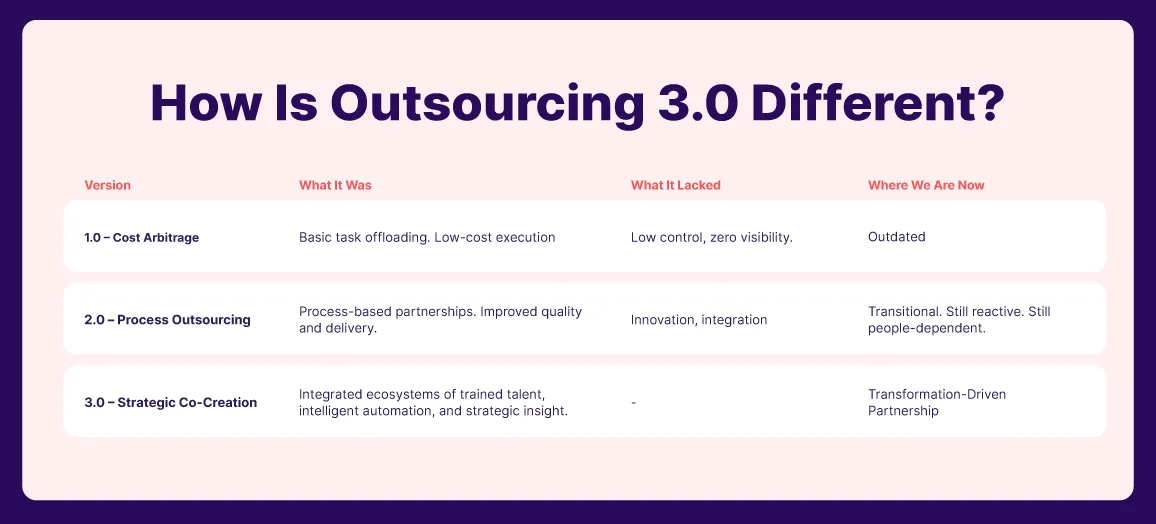
Here’s what firms are getting out of Outsourcing 3.0
- Ready-to-deploy talent that plugs into existing systems
- Defined processes that reduce rework
- Tech-enabled delivery with automation and real-time dashboards
- Clear ownership and accountability for outcomes
- Predictable capacity without year-round hiring stress
- Higher margins with less internal management effort
Want to deep dive further? Head to this blog!
Outsourcing 3.0: From surviving busy seasons to building future-ready firms
Click Here!
What “Secure” Actually Means in Accounting Outsourcing and Why It Matters ?
Security is a top priority when CPA firms outsource accounting work. These projects require access to sensitive financial and taxpayer information, such as Social Security numbers, payroll records, bank details, and company financial data. If this information is breached or mishandled, both firms and their clients risk identity theft or regulatory penalties. This can also cause serious, sometimes irreversible, damage to a firm’s reputation.
Because of these risks, security in outsourcing needs to go beyond just basic IT measures.
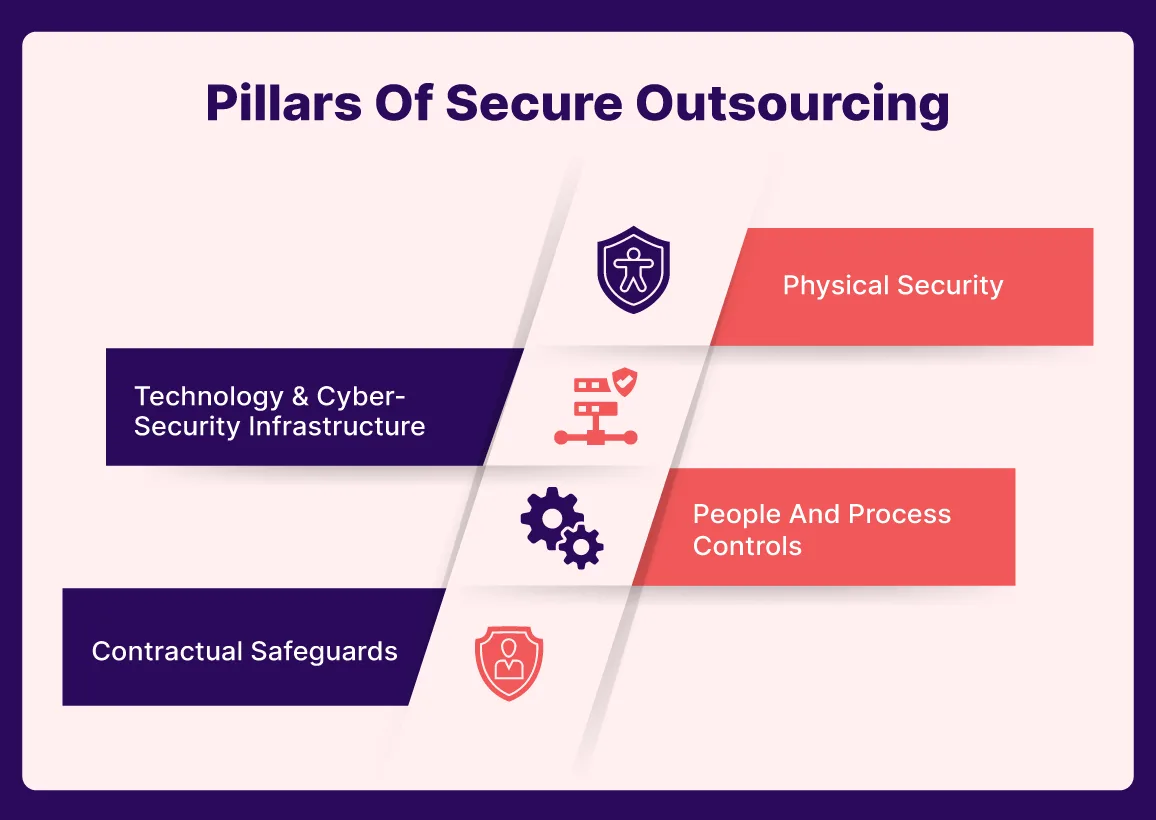
A secure outsourcing setup usually relies on four main pillars.
1.Physical security
Physical safeguards keep unauthorized people from entering places where financial data is handled. Reliable outsourcing providers use controlled office access, monitor workspaces, and enforce strict rules for device use.
2.Technology and cybersecurity infrastructure
Technology is the backbone of data security for CPA firms that outsource. Reputable providers operate within established security frameworks such as SOC 2 compliance and ISO 27001 information security standards. Many also adopt Zero-Trust security architecture and Secure Virtual Desktop Infrastructure (VDI) environments. These measures further ensure that client data remains within a protected infrastructure.
3.People and process controls
Security also relies on strong daily practices. Providers should check employee backgrounds, limit system access based on roles, and provide regular security training. This helps make sure only authorized staff can access sensitive client information.
4.Contractual safeguards
Finally, security responsibilities should be clearly outlined in contracts. These agreements should cover confidentiality, data handling, and what happens in the event of a breach.
When all these safeguards work together, outsourced accounting can meet the same standards of confidentiality and protection as in-house teams.

Build scalable, IRS-compliant delivery models—ready to scale with your firm.
Connect with us today!IRS Compliance in Accounting Outsourcing
Besides meeting security requirements, CPA firms also need to make sure their outsourcing agreements follow the rules for handling taxpayer information.
One of the most important rules in this area is Internal Revenue Code Section 7216.
IRC §7216 sets the rules for how tax preparers use and share taxpayer return information. Firms are not allowed to share taxpayer data with third parties, including outsourcing providers, without the client’s clear consent.
The consent must clearly identify the outsourcing provider and explain how the taxpayer information will be used.
Violations of IRC §7216 can result in both civil and criminal penalties. Civil penalties may include fines of $250 per unauthorized disclosure, with annual maximum penalties of $10,000, while criminal violations can lead to additional fines and possible imprisonment.
Another important regulatory reference is IRS Publication 4557, which outlines security responsibilities for tax professionals. The publication requires firms to implement safeguards across three categories:
- administrative safeguards
- technical safeguards
- physical safeguards
These requirements form the basis of modern CPA firm data protection standards.
CPA firms must also comply with the FTC Safeguards Rule (Federal Trade Commission), which requires financial institutions to maintain a Written Information Security Plan. This rule obligates firms to assess risks to client data and oversee the security practices of third-party service providers.
Even when accounting work is outsourced, the CPA firm remains responsible for protecting taxpayer information and maintaining compliance with tax regulations.
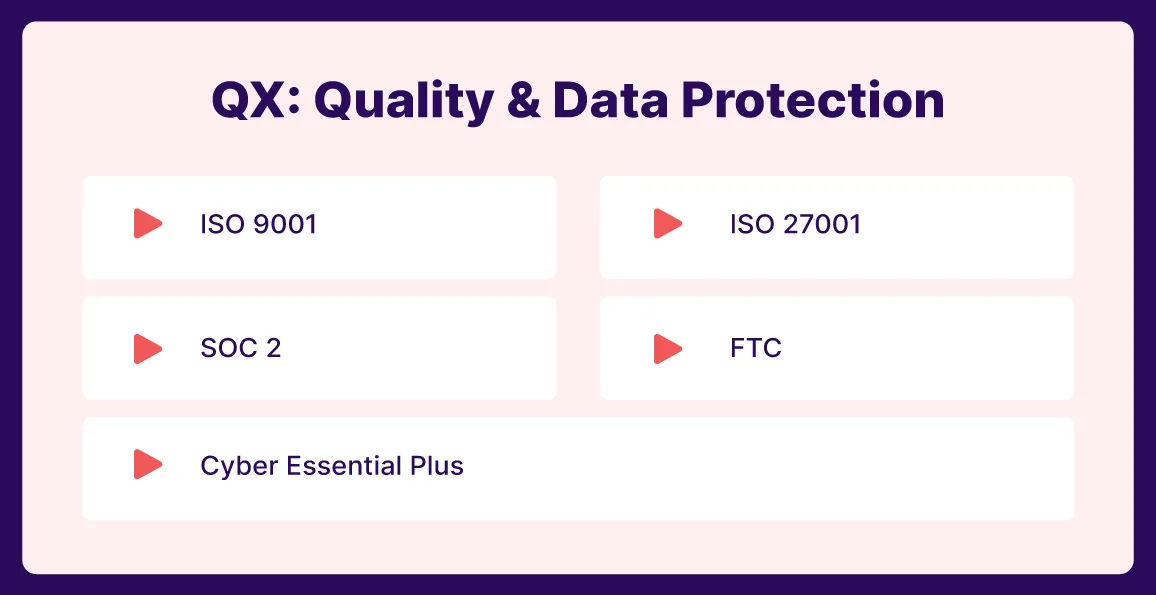
QX Accounting Services complies with all ISO, IRS and FTC Safeguards Rule for US‑based accounting services. A formal, risk‑based information security program is maintained that aligns with regulatory expectations for protecting customer information.
This program includes administrative, technical, and physical safeguards such as access management, encryption, security awareness training, vendor risk management, incident response, and regular risk assessments, and is reviewed periodically to ensure process discipline and security maturity.
Compliance Framework for Secure Outsourcing
Secure outsourcing is not a one-and-done event. It demands to be embedded in every phase of the engagement lifecycle.
It is potent for firms to understand the compliance framework of their outsourcing partner before they enter into a contract. CPA firms should also dive deep into vendor risk assessment. This means scrutinizing security certifications, infrastructure design, and proven experience with U.S. accounting clients.
Throughout the engagement, firms should keep a close watch by setting clear service agreements, tracking system access, and mapping out workflows in detail.
Even after the engagement wraps up, client data should be safeguarded with utmost care. Strong data retention rules and clear deletion steps are key to staying compliant.
By staying vigilant at every stage of the outsourcing journey, firms can keep their accounting practices in step with security standards and uphold their professional responsibilities.
20 Years. Zero Data Security Breaches.
QX Accounting Services is a fully SOC 2–compliant outsourcing partner, with ISO 27001 and ISO 27701 certifications. 350+ US accounting firms trust us to handle sensitive financial data, securely, consistently, and without compromise.
Importance of SOC 2 for QX Accounting Services
We are continuously hearing reports of data breaches in some of the biggest organizations across diverse sectors. Customer data is now a prime currency and criminals are after sensitive customer data including Personally Identifiable Information (PII), financial information and any other information that is valuable to the customer and the organization.
QXAS has earned its SOC 2 report on the back of its focus on ensuring complete data security and seamlessly efficient data management. This means, our clients are rest assured their data is managed securely and will not be accessed in an unauthorized manner.
Choosing the Right Outsourcing Partner
Choosing the right outsourcing partner is a key decision for CPA firms. Outsourcing can boost your firm’s capacity. However, a major portion of success depends on whether the provider can meet U.S. accounting regulations, security needs, and workflow standards.
Security infrastructure should be among the first areas to be evaluated. A reliable partner should operate within environments that support SOC 2-compliant accounting outsourcing and maintain strict access controls for sensitive financial information.
But security certifications are just the start. Make sure the provider also understands how CPA firms work, including tax processes, US GAAP reporting, and IRS compliance requirements.
Today, many CPA firms choose specialized outsourcing providers who offer both secure systems and strong accounting expertise. For instance, companies like QX Accounting Services provide U.S. firms with teams trained in U.S. tax and accounting rules, all within secure environments that meet data protection standards.
When looking at possible partners, keep these factors in mind:
- Security certifications, like SOC 2 compliance and strong information security systems
- Secure infrastructure, with limited access and monitored systems
- Experience working with U.S. CPA firms, especially in tax prep and bookkeeping
- Training for accounting staff that matches U.S. standards
- Clear SOPs for handling security incidents
A careful due diligence process helps make sure your outsourcing partnership boosts your firm’s capacity while keeping you compliant and maintaining client trust.
Also Read: Top 10 Outsourced Accounting Services Companies in the USA
Building a Secure and Scalable Outsourcing Model
Accounting firms are dealing with talent shortages, complex regulations, and rising client expectations, and these challenges are likely to continue. As a result, many firms are rethinking how they deliver their services.
Forward-looking CPA firms now see outsourcing as more than just a way to handle busy seasons. It’s becoming a key part of building operations that can grow and adapt.
When outsourcing is implemented within secure infrastructure environments, aligned with IRS, ISO and FTC compliance; it enables firms to expand delivery capacity while maintaining strict data protection and confidentiality standards.
Top firms now treat outsourcing as a long-term partnership, not just a one-time deal. Because at the end secure outsourcing isn’t just about moving work outside your firm. It’s about creating a model that blends your team’s skills with reliable outside help.
This is exactly what experienced partners like QX Accounting Services, bring to the table.
When done right, outsourcing enables firms to keep financial data safe, stay compliant, and spend more time on the strategic advice that is shaping the future of the profession.
Discover how QX Accounting Services can help you build scalable delivery models while maintaining the highest standards of data protection and regulatory compliance. Talk to us today.
FAQs
What accounting tasks can CPA firms safely outsource?
The safety factor is usually attached to the outsourcing partner, not to the outsourced tasks. When proper access controls and infrastructure are in place, outsourcing does not compromise data security. Given this, CPA firms can outsource tasks such as bookkeeping, tax preparation support, payroll processing, and accounts payable/receivable as part of accounting outsourcing for CPA firms. When done right, these tasks follow defined workflows and can be executed within secure, controlled environments. Many firms use outsourcing to manage volume while maintaining internal oversight. The key is ensuring the provider operates within strong data protection and compliance frameworks.
What are the biggest security risks when outsourcing accounting for CPA firms?
The biggest risks include unauthorized access to client data and failure to meet regulatory requirements. Weak access controls, insecure data transfer methods, and a lack of monitoring can expose firms to breaches. Another risk may be inadequate employee training on confidentiality and Internal Revenue Service (IRS) regulations. These issues can lead to financial penalties and reputational damage. However, they can be mitigated by choosing providers with strong security frameworks and practices aligned with CPA firm data protection standards.
Are outsourced accounting services compliant with IRS regulations for CPA firms?
Outsourced accounting services can be fully compliant with Internal Revenue Service (IRS) regulations when implemented correctly. Providers that are proactive about security and governance ensure that sensitive data is handled appropriately. This includes alignment with IRS Publication 4557, the FTC Safeguards Rule, and broader tax compliance requirements. In many cases, this is what defines IRS compliance in accounting outsourcing. Ultimately, compliance depends on both the provider’s controls and the CPA firm’s oversight.
How do accounting outsourcing providers ensure IRS compliance?
Reputable providers align their operations with the Internal Revenue Service (IRS) and related regulatory frameworks. They implement secure infrastructure, controlled access environments, and continuous monitoring systems to support compliance. Measures typically include training teams on IRS confidentiality requirements, maintaining audit trails, and documenting workflows for transparency. Many also operate within structured frameworks such as SOC 2 compliance to strengthen controls. This approach helps ensure consistent and reliable compliance in outsourced environments.
What should CPA firms check before choosing an outsourced accounting provider?
CPA firms should evaluate both security and operational capabilities before selecting a provider. This includes reviewing certifications such as SOC 2 compliance, understanding how data is accessed and protected, and assessing the effectiveness of internal processes. Firms should also consider the provider’s experience with U.S. accounting standards and IRS requirements. It is important to review incident response protocols and governance structures. A thorough due diligence process ensures the partnership supports secure and compliant accounting outsourcing for CPA firms in the USA.
Enquire now

Cora Vollmar
With over 20 years of experience in accounting, talent strategy, operations, and business development, Cora Vollmar helps CPA firms solve capacity challenges and build scalable growth strategies. She is an expert in senior-level accounting and CPA recruiting, with a proven track record of helping firms develop talent pipelines, recruit leadership professionals, and address the ongoing accounting talent shortage.
Through strong relationships with State CPA Societies, accounting alliances, and industry organizations, Cora brings valuable insight into firm growth, talent trends, and the future of the profession. At QX Accounting Services, she helps firms leverage global talent, managed services, and workforce strategies to build sustainable capacity and support long-term growth.
Unauthorized copying or plagiarism of our content is a violation of intellectual property rights. We take such matters seriously and will pursue legal action to protect our original work. Anyone found engaging in such activities will be held accountable under applicable laws.
Don't forget to share this post!
Our Latest Insights




Let’s Work Together
Explore outsourcing solutions, request a no-obligation trial or discuss your practice’s needs with our expert consultants.
 Book a Virtual Meeting
  Get Your ROI Estimate