



According to Xero’s 2025 Accounting and Bookkeeping Industry Report, 79% of accounting practices reported revenue growth and 74% reported higher profits, yet many firms still struggle to convert demand into sustainable, scalable growth. The same study found that client numbers increased by an average of 15%, highlighting a clear reality: winning work is not the problem for many firms. Delivering that work efficiently is.
More than three quarters (77%) of UK accountancy and finance employers expected a shortage of suitable applicants, according to Hays’ 2025 findings.
That statistic is the backdrop to The Hidden Revenue Ceiling Inside Mid-sized Accounting Firms: even with healthy demand for accounting services UK clients want, many UK accounting firms can’t convert pipeline into profitable delivery. The ceiling appears as a “mysterious” revenue plateau: growth slows, partner hours spike, deadlines slip, write-offs rise, and margins tighten, even while the market still looks attractive.
This article unpacks the most common accounting firm revenue plateau causes, explains why accounting firms hit a revenue ceiling, and gives a practical playbook for scaling mid-sized accounting firms without wrecking quality, people, or profitability.
The hidden revenue ceiling in accounting firms is the point at which delivery capacity stops scaling linearly with sales. You can keep selling, but you can’t keep shipping work at the same quality and margin.
It’s “hidden” because it rarely shows up in one obvious metric. Instead, it appears across multiple symptoms:
In other words: the firm isn’t short of work. It’s short of organised throughput.

Large firms can absorb fluctuations through scale. Smaller firms often remain agile enough to adapt quickly.
Mid-sized accounting firms occupy a difficult middle ground. They are large enough to win significant volumes of work but not always structured to deliver it efficiently at scale.
Common Symptoms
| Growth Indicator | Hidden Problem |
|---|---|
| New client wins | Backlogs increase |
| Rising revenue | Profit margins stagnate |
| Increased headcount | Operational complexity rises |
| More compliance work | Advisory opportunities get delayed |
| Larger client portfolio | Service quality becomes harder to maintain |
The result is a growth paradox: the more successful the firm becomes, the harder it becomes to grow profitably.
Below are three primary reasons that accelerate the growth ceiling for accounting firms:
UK practices have structural seasonality:
Even when you add headcount, the peaks don’t flatten. They often intensify, because more clients means more concurrent deadlines.
Making Tax Digital (MTD) also adds operational pressure. HMRC has confirmed the phased mandation for MTD for Income Tax (April 2026 for over £50k income; April 2027 for over £30k; and a further reduction to £20k from April 2028). That translates into additional client comms, software onboarding, data-quality remediation, and support tickets, all capacity-consuming work that’s easy to underprice.
ICAEW’s mid-tier research highlights how acute hiring pressure is in the middle: 56% of firms cited attracting and recruiting qualified staff as a top-three talent challenge.
That matters because managers are the throughput engine:
When manager bandwidth is constrained, partner time gets pulled into production and rescue work, and your effective sales capacity collapses.
Even for firms not focused on PIE audits, the broader quality environment influences methodology, documentation, and review standards. The FRC’s Annual Review of Audit Quality (July 2025) reported 85% of FTSE 350 audits inspected required no more than limited improvements, with 5% requiring significant improvements.
The practical takeaway: regulators are watching quality closely, and that increases the cost of “good enough”. More review time becomes non-negotiable, which is exactly how the hidden revenue ceiling in accounting companies forms.
Mid-sized firms typically believe the constraint is headcount. Often, it’s flow.
If every partner has their own pack, templates, review style and client rules, you can’t scale. You train people multiple times for the same outcome.
Most firms unconsciously operate as “partner review factories”. When review queues build, WIP ages, deadlines compress, and teams resort to overtime (which drives errors and rework).
A surprising amount of work is:
This is where outsourcing bookkeeping vs in-house team becomes relevant: whichever model you use, the goal is to industrialise the clean-up and protect senior time.
Fixed fees without scope controls turn into margin leakage:
This is why improving accounting firm margins is as much a commercial design issue as an operational one.
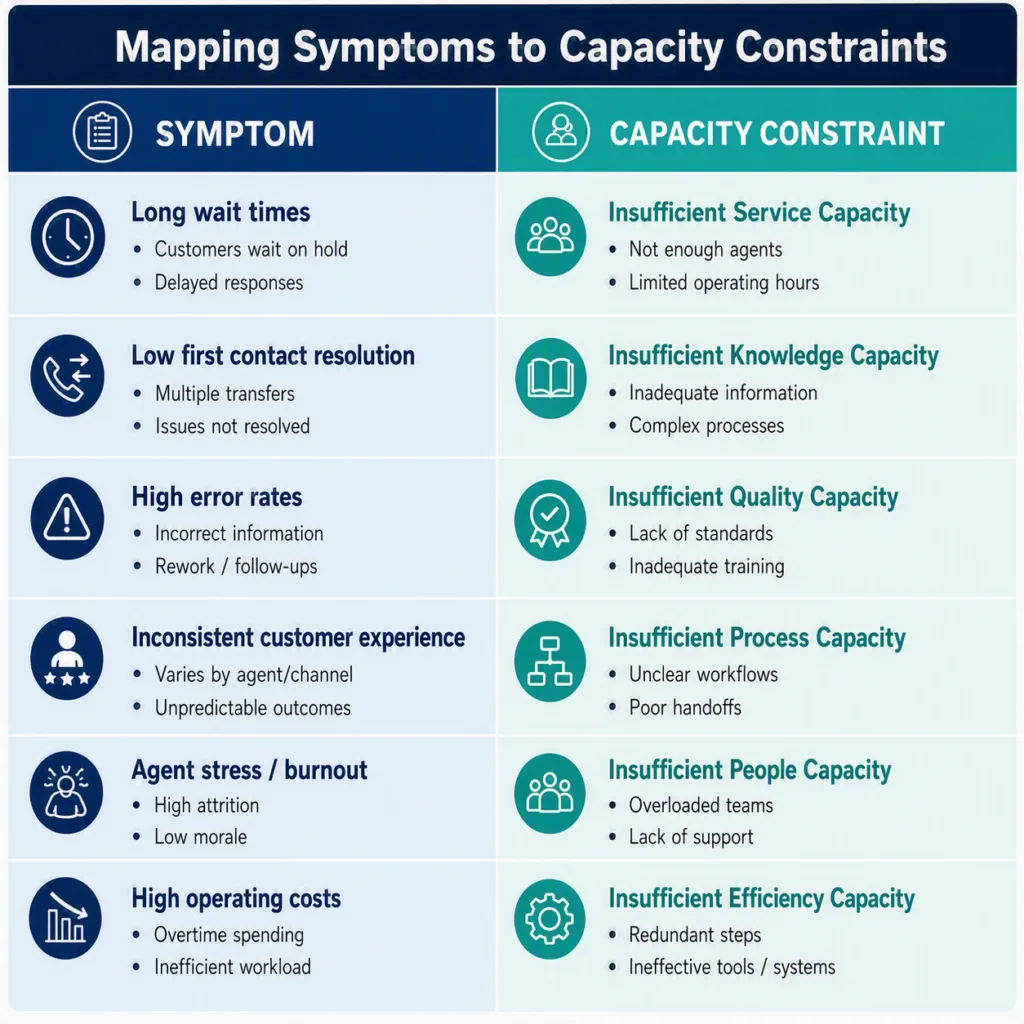
Many firms track fees and chargeable hours but miss the operational truth. If you want best KPIs for accounting firms to support business scalability for accounting firms, focus on capacity + flow + margin.
At minimum, model:
Treat core services like products:
Practical steps:
This reduces rework and makes automation meaningful.
Accounting workflow automation tools pay off fastest where volume is high and variation is low. Examples:
Don’t start with “AI everywhere”. Start with:
That’s how you convert hours into throughput.
If you’re asking how to increase accounting firm revenue, pricing is often the highest-leverage answer, but only if you pair it with scope design.
A practical advisory services pricing model:
Move from “hours × rate” to:
This is the logic behind value-based pricing for accounting firms: price the value of reduced risk, improved insight, and speed, not the internal effort.
Also do client profitability analysis for firms quarterly:
Then act:
Many firms want recurring revenue but run it like bespoke monthly firefighting.
A more scalable approach is CAS vs traditional accounting:
CAS scales when:
This reduces peak dependence and supports accounting firm profitability.
Accounting outsourcing for growth works when it is engineered into the operating model:
This is where accounting outsourcing services can create real leverage:
Used properly, outsourcing helps remove low-to-mid complexity production from the partner/manager bottleneck, enabling mid-sized accounting firm growth strategy execution without uncontrolled payroll expansion.
Mid-sized firms often accumulate compliance work that is:
Add MTD programme change and onboarding, and you get more volume, but not necessarily more margin. HMRC has also estimated compliance cost impacts for some businesses as MTD ITSA expands, signalling more client support demand as digital obligations widen.
So, the strategy is not to avoid compliance. It is to:
Mentioning UK GAAP here is crucial: statutory accounts quality and consistency are not optional, so your operating model must make quality repeatable.
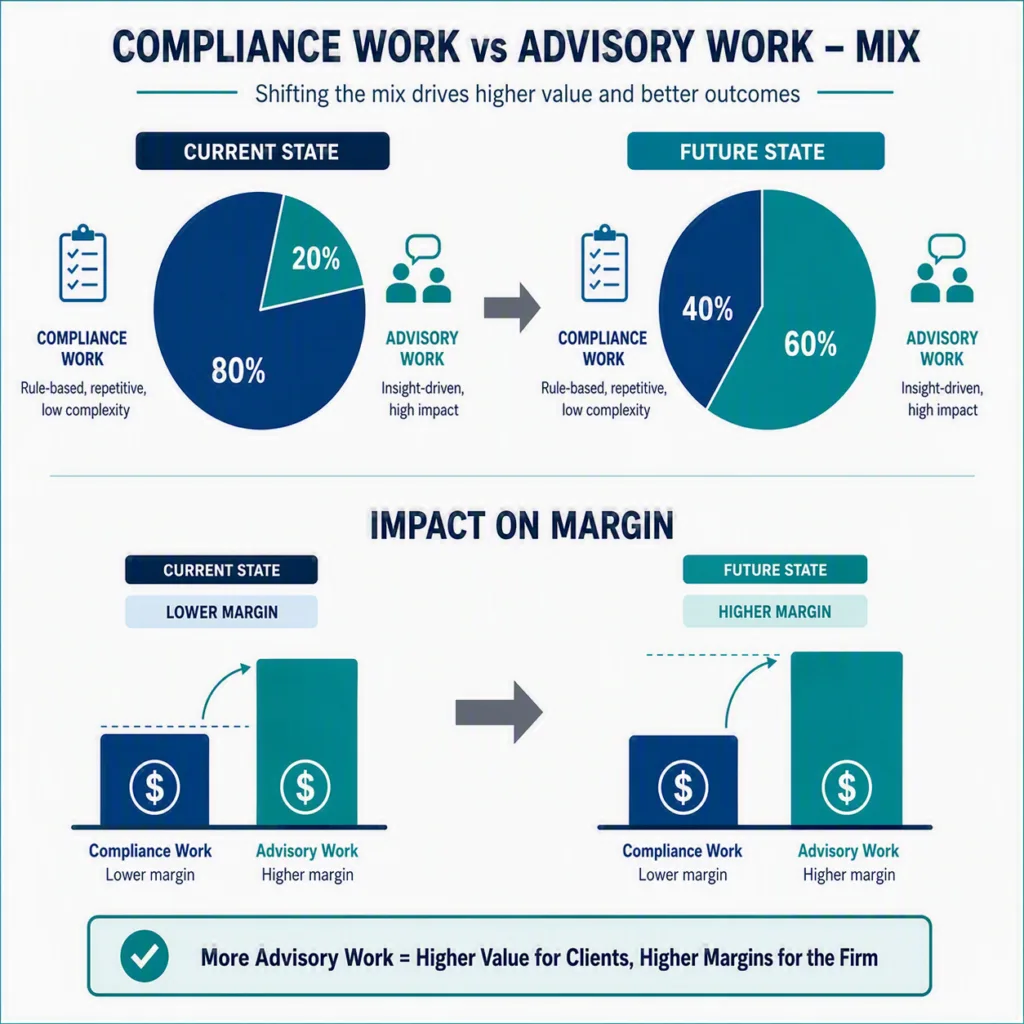
This is how you turn “busy” into “scalable”.
QX Accounting Services is an outsourced delivery partner that supports accounting firms with back-office and finance processes, commonly including bookkeeping, management accounts, year-end accounts preparation support, and related workflow activities (depending on scope and client needs).
For mid-sized UK accounting firms looking at accounting firm revenue growth without continually adding local headcount, QX is typically positioned as an extension of the firm’s delivery capability rather than a replacement for UK-facing leadership and client advice.
The hidden revenue ceiling inside mid-sized accounting firms is rarely solved by selling harder. It is solved by removing operational bottlenecks, designing around capacity constraints, and building a delivery system that can handle UK seasonality and regulatory realities (HMRC change, FRC quality expectations, UK GAAP consistency) without sacrificing margin.
If your firm is experiencing a revenue plateau, start with flow metrics (WIP ageing, cycle time, realisation), standardise your highest-volume services, and fix pricing and scope design. Then, if you need additional scalable capacity, explore accounting outsourcing for growth through a structured partner such as QX Accounting Services, as a planned extension of your team, with governance and quality controls, not a reactive overflow tactic.
A revenue ceiling typically emerges when operational capacity can no longer support additional growth. Common causes include capacity constraints, recruitment challenges, partner dependency, inefficient workflows, and increasing compliance workloads.
Accounting outsourcing creates additional delivery capacity without requiring proportional increases in local headcount. This allows firms to scale client work, improve turnaround times, and pursue growth opportunities more confidently.
Key operational bottlenecks include review backlogs, manual processes, partner dependency, workflow inefficiencies, recruitment delays, and capacity shortages during peak periods.
Firms can increase revenue by improving operational efficiency, leveraging technology, standardising workflows, optimising resource utilisation, and introducing scalable outsourcing models that support growth without major fixed-cost increases.
Common indicators include declining utilisation rates, longer turnaround times, increasing review backlogs, falling profit margins, delayed onboarding, rising staff overtime, and growing recruitment dependency.
Outsourcing helps firms create delivery capacity more efficiently, reducing recruitment costs, improving utilisation, supporting faster growth, and allowing senior staff to focus on higher-value revenue-generating activities.
Successful strategies include process optimisation, workflow automation, resource planning, technology investment, standardised delivery models, and strategic accounting outsourcing partnerships.
Many firms partner with QX Accounting Services because we help them build scalable capacity, reduce operational pressure, improve turnaround times, strengthen profitability, and support long-term accounting firm revenue growth without relying solely on local recruitment.

Pramith Naidu is an accounting and payroll expert with a deep understanding of accounting firms’ challenges. He helps accounting and payroll businesses achieve efficiency and cost savings through customised outsourcing solutions. His focus is on delivering engagement models that address both immediate priorities and long-term goals, enabling firms to streamline operations and drive sustainable growth.
Unauthorized copying or plagiarism of our content is a violation of intellectual property rights. We take such matters seriously and will pursue legal action to protect our original work. Anyone found engaging in such activities will be held accountable under applicable laws.
Explore outsourcing solutions, request a no-obligation trial or discuss your practice’s needs with our expert consultants.





 Book a Virtual Meeting
  Book an In-person Meeting