



Every January, the same pattern repeats.
According to HM Revenue & Customs (HMRC), more than 11 million Self Assessment returns are filed each year. Yet, a significant portion of these are submitted in the final weeks, and in some cases, the final hours before the deadline. In recent years, over 700,000 taxpayers have filed on deadline day alone, with thousands submitting returns in the last hour.
You don’t need a report to know what that looks like inside an accounting firm.
Overloaded teams.
Constant client chasing.
Compressed review cycles.
And an uncomfortable rise in errors.
What’s often overlooked is that this isn’t just a seasonal inconvenience; it’s a structural inefficiency. Firms that continue to operate this way limit their ability to scale, advise, and retain clients.
The firms pulling ahead have made a simple shift: they start early.
Leaving tax preparation until the final quarter creates a reactive operating model. Work arrives in a concentrated burst, forcing teams to prioritise speed over judgement.
Under these conditions, even experienced professionals are more likely to miss inconsistencies in financial data or overlook optimisation opportunities. A rushed review of UK tax forms and payroll documentation often leads to rework, either internally or after submission, eating into already tight margins.
There’s also a direct financial implication for clients. HMRC imposes an automatic £100 penalty for late Self Assessment submissions, even if no tax is due. Beyond that, interest accrues on unpaid liabilities, and disputes can escalate into lengthy HMRC tax penalties and appeals processes.
From a client’s perspective, these aren’t just administrative issues. They reflect on the firm’s reliability.
From a firm’s perspective, it is lost time, reduced profitability, and reputational risk.
Collect data from clients easily and manage everything efficiently in one place
Download Now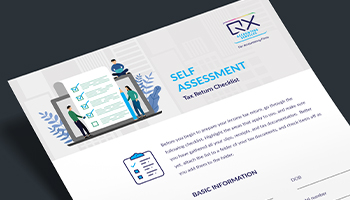
Early bird tax preparation isn’t just about moving timelines forward. It fundamentally changes the quality of work your firm delivers.
When tax returns are prepared earlier in the year, the nature of the work shifts. Instead of assembling information under pressure, your team has the time to review, question, and refine.
This is particularly valuable when handling UK Self Assessment and tax refunds. Early preparation allows firms to identify overpaid taxes sooner, correct discrepancies, and submit accurate returns well ahead of deadlines. Clients benefit from faster refunds, which directly improves their cash flow and reinforces trust in your service.
It also reduces the back-and-forth typically seen in January, where missing documents and rushed clarifications delay submissions.
One of the biggest missed opportunities during peak season is advisory work.
When your team is focused purely on meeting deadlines, there’s little room to step back and evaluate a client’s broader financial position. Starting early creates space for meaningful conversations around UK tax and salary overview, allowing you to assess how income is structured and whether it’s tax-efficient.
It also opens the door to optimising UK tax brackets and allowances. Many clients underutilise available reliefs or fail to plan income distribution effectively. These are not complex problems, but they do require time and attention, both of which are scarce in January.
Early engagement transforms your role from a compliance processor to a strategic partner.
Accuracy in tax preparation is rarely about technical knowledge alone. It is about having the time to apply it properly.
When firms begin work earlier in the cycle, they can conduct thorough reviews of UK tax forms and payroll documentation, cross-checking figures against prior-year filings and supporting records. This reduces the likelihood of inconsistencies that might otherwise trigger HMRC queries.
It also improves internal quality control. Senior reviewers can focus on higher-value checks rather than rushing through approvals, and teams can resolve discrepancies without the pressure of imminent deadlines.
Over time, this leads to fewer corrections, fewer client escalations, and a more consistent standard of output.
The introduction of Making Tax Digital for Income Tax Self Assessment has already reshaped compliance expectations, and its influence continues to grow across the tax landscape.
Early preparation allows firms to align their processes with MTD requirements well in advance. This includes ensuring that digital records are complete, submissions are compatible with HMRC systems, and any integration issues are resolved early.
Firms that delay often find themselves dealing with last-minute technical challenges, whether it is incompatible software, missing data trails, or submission errors. These issues are far easier to manage when there’s time to address them properly.
Early adoption doesn’t just reduce risk. It also builds operational confidence.
Not all tax returns are created equal.
Cases involving CIS tax return and refunds, multiple income streams, or historical discrepancies require deeper analysis and careful handling. Similarly, preparing HMRC SA302 and tax year overviews often involves reconciling detailed financial data across multiple years.
These are precisely the types of cases that suffer most under time pressure.
Starting early ensures that complex clients receive the attention they need. It also gives your team time to liaise with clients, gather missing information, and validate assumptions before submission.
The result is not just accuracy. It is confidence in the outcome.
From a commercial standpoint, early tax preparation is one of the simplest ways to improve firm performance.
When work is distributed more evenly across the year, teams operate at a sustainable pace. Productivity improves, not because people are working harder, but because they’re working more effectively.
This has a direct impact on profitability. Less rework means better realisation rates. Fewer deadline pressures mean fewer write-offs. And with more time available, firms can expand their offering beyond compliance into higher-margin tax and accounting services.
There’s also a capacity advantage. Firms that aren’t overwhelmed in January can take on more clients without increasing headcount, creating a scalable growth model.
Many accountants and partners assume clients won’t respond until deadlines are near.
In reality, client behaviour is shifting.
Businesses are increasingly looking for predictability. They want early visibility into liabilities, more time to plan payments, and fewer surprises. Individuals, on the other hand, are motivated by faster refunds and reduced stress.
The difference lies in how the message is framed. When firms position early engagement as a benefit instead of burden, clients are far more likely to participate.
Transitioning to an early preparation model requires capacity and consistency – two areas where many firms struggle internally.
That’s where QX Accounting Services comes in.
Our personal tax outsourcing services are built to support accounting firms that want to move away from reactive tax seasons. We provide dedicated teams that work alongside your practice, enabling you to begin processing returns well before peak months.
This includes end-to-end handling of UK Self Assessment, support for CIS tax return and refunds, and preparation of HMRC SA302 and tax year overviews. Each return goes through structured review processes, ensuring accuracy without slowing down turnaround times.
By extending your team with experienced professionals, you gain the flexibility to scale without the burden of hiring and training seasonal staff.
To encourage firms to adopt this approach, QX offers a dedicated Early Bird programme tailored for tax practices, with tax preparation starting at just £30*. The offer is valid for a limited time and helps you save up to 50% of peak season costs. View our full pricing here.
Firms that onboard early benefit from priority resource allocation, which means your work is scheduled and managed before peak demand begins. This not only improves turnaround times but also ensures consistency in delivery.
There’s also a cost advantage. Early engagement allows for better planning and resource utilisation, making it more efficient than last-minute outsourcing during January.
More importantly, it gives your firm control over the tax season, something that’s difficult to achieve when you’re reacting to deadlines.
Moving to an early bird model doesn’t require a complete overhaul. It starts with small, deliberate changes.
Begin by communicating with clients earlier in the year, setting clear expectations around timelines and document submission. Segment your client base so that high-value or complex cases are prioritised.
Internally, build a workflow that spreads work across months rather than weeks. And where capacity is limited, consider outsourcing as a way to bridge the gap without increasing fixed costs.
Over time, these changes compound into a more stable and scalable operating model.
1. Why should UK accounting firms start tax preparation before December?
Starting early reduces last-minute pressure, improves accuracy, and allows time for advisory around UK tax brackets and allowances.
2. When should firms ideally begin UK Self Assessment preparation?
The most effective window is between April and September. This allows time for data collection, review, and advisory discussions before peak season begins.
3. How does early tax preparation improve efficiency for accounting firms?
Work is spread across months instead of weeks, reducing rework and enabling smoother processing of UK tax forms and payroll documentation.
4. Does early filing change payment deadlines?
No. Payment deadlines remain the same, but early filing gives clients more clarity and time to plan.
5. What risks arise from delaying tax preparation until year-end?
Delays increase the risk of errors, missed deadlines, and exposure to HMRC tax penalties and appeals.
6. How does early preparation reduce HMRC penalties?
By avoiding last-minute submissions, accounting firms significantly reduce the risk of errors and missed deadlines that lead to penalties.
7. What processes should accounting firms prepare before peak tax season?
Firms should streamline workflows, align systems with Making Tax Digital, and set clear client communication timelines.
8. Can outsourcing maintain quality standards?
Yes, outsourcing tax can maintain quality standards, provided you work with experienced partners like QX Accounting Services that follow structured review and compliance processes.
9. Is early preparation suitable for smaller firms?
In many cases, smaller firms benefit the most, as it helps them manage workload without overextending their teams.
10. How does early tax preparation improve client service and compliance?
Early tax preparation ensures faster filings, quicker refunds, and more accurate submissions, improving both client satisfaction and compliance.
11. How can firms avoid bottlenecks during busy tax filing periods?
Accounting firms can avoid bottlenecks during busy tax filing periods by starting early, standardising workflows, and leveraging outsourcing to manage volume spikes efficiently.
December doesn’t have to be chaotic. The firms that consistently deliver better outcomes, both for their clients and their own business, are the ones that refuse to operate on deadlines alone.
They plan earlier.
They work smarter.
And they create space for growth.
The shift to early bird tax prep isn’t dramatic. But its impact is.

Dinesh is a seasoned accounting and tax professional with more than 20 years of experience, specialising in UK personal tax. He has a proven track record of streamlining tax processes and building strong client relationships, consistently delivering accurate and compliant taxation services tailored to client needs.
Unauthorized copying or plagiarism of our content is a violation of intellectual property rights. We take such matters seriously and will pursue legal action to protect our original work. Anyone found engaging in such activities will be held accountable under applicable laws.
Explore outsourcing solutions, request a no-obligation trial or discuss your practice’s needs with our expert consultants.





 Book a Virtual Meeting
  Book an In-person Meeting