Why February 2026 is the Strategic Month to Outsource Audit Planning



Summary:
February offers a rare planning window for U.S. CPA firms to get ahead of audit season while tax work is underway. This blog explains why outsourcing audit planning and risk assessment in February helps firms manage audit staff shortages, strengthen workpaper documentation, and reduce peer review risk.
Everyone in the accounting industry knows what busy season burnout feels like. Tax deadlines are front and center. Teams are stretched, and review queues are full.
Most firms don’t like thinking about audit readiness amid this chaos. But just as teams push toward tax closure, audit timelines quietly start moving closer.
This is exactly why February becomes the right time to start preparing for the audit cycle.
The month creates a rare planning window. It sits between year-end reporting and full audit fieldwork. Used well, it gives firms the time and space to prepare audit planning, risk assessment, and documentation before pressure peaks. Used poorly, it becomes a missed opportunity that turns March and April into firefighting months.
Audit readiness during tax season may sound counterintuitive. In practice, it is one of the most practical moves firm leaders can make.
The next section explains why February is such a crucial month and how it can be used effectively for audit planning.
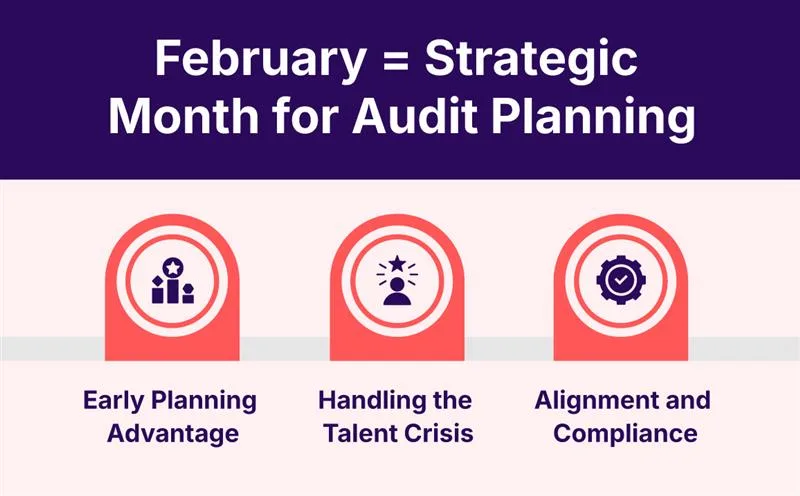
Early Planning Advantage
At its core, auditing is primarily about analyzing last year’s work. And that starts with one thing: getting the right data, early. Many activities on this list (some of which are mentioned below) do not require senior judgment every minute. They require accuracy, structure, and consistency.
- Workpaper setup and roll-forwards
- Lead schedules and casting
- Risk-based audit approach design
- Materiality threshold calculation
Picture this: While your internal teams focus on tax preparation and reviews, outsourced audit support teams can work in parallel. They handle documentation-heavy, process-driven tasks quietly in the background. When fieldwork begins, senior auditors are not bogged down by redundant data collection and documentation. They are focused on analysis, judgment, and client-facing discussions.
Solving the 2026 Talent Crisis in the Audit Department
Many of the firms feel prepared for the audit months until they re-examine at their teams and realize they don’t have the required capacity or talent to handle the tasks.
Hence begins the scramble. Firms start searching for professional auditors. They easily shortlist from a large pool of available talent, interview and hire the required people within days.
Right? Entirely wrong.
The reality: talent is tight, and the old ways of hiring aren’t keeping up.
A survey by the Center for Audit Quality (CAQ) found that talent shortages remain one of the top concerns for audit firm leaders, with many citing delayed audits and increased strain on senior reviewers as direct outcomes. This creates a risky operating model, where audit planning gets pushed back until tax season ends, leaving little room to absorb delays or rework.
This is where February becomes strategic. By leveraging outsourced audit support for planning tasks such as workpaper documentation, lead schedules, and risk-based audit scoping, firms can front-load preparation without adding permanent headcount.
This approach helps stabilize delivery, reduce burnout during peak months, and protect audit quality when internal teams are already stretched.
At QX, we are shaping a more evolved version of outsourcing: Outsourcing 3.0. This approach is entirely focused on bringing together global talent, modern technology, and process transformation into a single operating model.
Sagar Ahuja, CEO, QX Accounting Services
The result is dependable, resilient delivery engine that supports firms year round. More importantly, this model shifts offshoring from a capacity fix into a true competitive advantage; which is something most firms are actively working toward today.

Ready to move beyond traditional offshoring? Explore how QX can help modernize your delivery model.
Connect with us today!Alignment and Compliance
February is a crucial time when firm leadership can realign audit plans with the current year’s financial goals, business opportunities and emerging risk areas. Client portfolios shift, business models evolve, and risk profiles change year over year. Early planning ensures audit scope reflects what actually matters this year, not last year’s assumptions.
Regulatory expectations continue to tighten across US GAAS and PCAOB standards, with greater scrutiny on documentation quality and risk assessment. Preparing in February gives firms time to update methodologies, templates, and workpapers before fieldwork begins. This reduces last-minute adjustments and improves consistency across engagements.
Outsourced audit planning support further strengthens compliance by embedding current standards into documentation from the start. This reduces peer-review risk, improves inspection readiness, and protects the firm’s reputation at a time when audit quality is under increasing scrutiny.
Why a Suitable Offshoring Partner Matters
Audit planning is sensitive and confidential. It involves client data, internal controls, and professional judgment, all of which directly impact audit quality and peer review outcomes. Not every offshore provider is equipped to operate within the rigor required for U.S. audits.
Firms should evaluate partners on audit-specific capability, instead of just focusing on cost or capacity. The right partner demonstrates working knowledge of:
- US GAAS compliance and PCAOB expectations
- Risk assessment documentation standards
- Review workflows and peer review sensitivity
- IFRS SOPs where applicable for cross-border engagements
Having said this, delivery maturity is also equally important. Providers must demonstrate standardized workpaper frameworks, experienced audit-trained teams, and repeatable planning processes.
Partners like QX have expertise in embedding these requirements into the delivery model itself, enabling audit planning to be consistent and aligned with U.S. methodologies, without increasing partner oversight burden.
Security & Compliance: Most Crucial Component
Security and compliance are indispensable components of audit planning and risk assessment. These must be engineered into how audit work is delivered from day one. Audit planning relies on the integrity of client data, workpaper documentation, and risk judgments tied to US GAAS. Any lapse in data handling undermines audit quality, inspection outcomes, and client trust.
A credible delivery model operationalizes controls through SOC 2–aligned environments, role-based access, secure workspaces, and traceable workflows. This ensures audit evidence, risk assessment, related paperwork and calculations are controlled, auditable, and inspection-ready.
Providers such as QX operate in SOC 2-compliant environments and follow strict data security protocols, with no reported data breaches over the past 20 years. For CPA firms, this level of security maturity is essential. It protects confidentiality, supports peer review, and ensures audit readiness is grounded in trustworthy processes.
Over To You
It’s high time that we should stop treating February as a pause between seasons. This window can be used consciously to set up audit planning and risk assessment so the months ahead are not consumed by last-minute setup and avoidable rework.
Firms that use February to outsource audit planning enter March with structure and clarity. Those who delay often end up rushing foundational work at the cost of professional judgment, and advisory work
The choice is pretty simple and straightforward.
This is your sign to stop waiting until May to start your March audits. Use February to build readiness, reduce risk, and protect your teams.
Book a no-obligation strategy call today and get audit-ready before pressure peaks.
FAQs
1.Why is February the best time to outsource audit planning?
February sits at a strategic midpoint. Tax work is active, but audit fieldwork has not yet peaked. This timing allows firms to prepare documentation, risk assessments, and workpapers early; reducing pressure and rework later.
2.Can offshore teams handle US GAAS and PCAOB standards?
Yes, when teams are specifically trained on US auditing standards. The key is using partners experienced with US GAAS compliance, PCAOB expectations, and peer review requirements.
3.How does outsourcing audit planning reduce peer review risk?
Peer review issues often stem from weak planning documentation and inconsistent risk assessments. Outsourcing helps standardize workpapers, improve documentation quality, and ensure planning steps are completed thoroughly and on time.
4.What is the difference between audit staff augmentation and audit outsourcing?
Staff augmentation fills short-term headcount gaps. Audit outsourcing focuses on outcomes. Outsourcing assigns defined planning and documentation work to dedicated teams, reducing internal workload without adding management overhead.
5.What audit tasks are best suited for outsourcing in February?
Tasks like workpaper roll-forwards, lead schedules, casting, risk documentation, and pre-audit checklists are ideal. These activities prepare the audit foundation and free senior teams for higher-value work later.

Bhagyashree Patankar
With over 14 years of global experience in finance and accounting, Bhagyashree is a Chartered Accountant and US CPA with a master’s in Accounting and Finance. She leads an 80+ member team across accounting, audit, and tax, driving operational excellence, talent development, and high-quality delivery. Known for her precision and strategic insight, she transforms financial data into actionable business strategies that enhance decision-making, efficiency, and sustainable growth.
Unauthorized copying or plagiarism of our content is a violation of intellectual property rights. We take such matters seriously and will pursue legal action to protect our original work. Anyone found engaging in such activities will be held accountable under applicable laws.
Don't forget to share this post!
Our Latest Insights




Let’s Work Together
Explore outsourcing solutions, request a free trial or discuss your practice’s needs with our expert consultants.
 Book a Virtual Meeting
  Get Your ROI Estimate